View of the Tokaido

Photograph
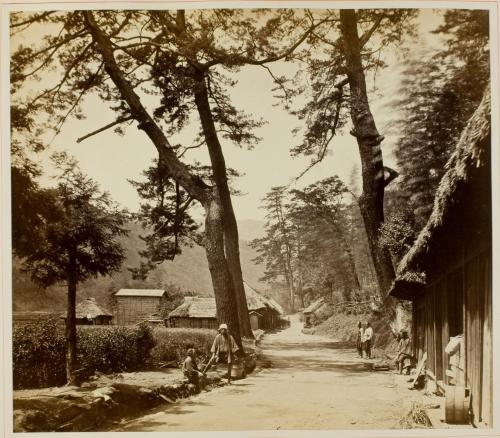
View of the Tokaido
From the album Photographic Views and Costumes of Japan. (Yokohama: F. Beato & Co., ca. 1875)
ca. 1868
Albumen silver print
24.3 x 27.8 cm.
Purchase
1979.0059.0004
Inscriptions (applied label, printed, opposite page):
VIEW ON THE TOKAIDO.
THERE are five main roads which radiate from Yedo, whose ramifications, like arteries, spread over a large extent of the island of NIPHON.
The Tokaido, which leads to OSAKA, and there terminates,
The Nakasendo, another road leading by a more circuitous route to OSAKA,
The Nikokaido, a hilly road leading to Miako,
Koof-kaido, leading to KOSHIU,
The Senjikaido which takes a Northern Easterly direction and leads to HAKODADI.
Of these main thoroughfares the Tokaido appears to be the one which merits most consideration, as being the principal highway, by which communication is facilitated between the largest cities of Japan, viz:--OSAKA, the central commercial port of Japan ; and Yedo which, up to the year 1865, was the residence of the Shiogun or Tycoon.
The Tokaido the road by which Daimios with their retinues most frequently travel, is broad, kept in very good order, and is also, for the most part level : although it crosses considerable mountain passes,--such as Hakoni,--numerous rivers and more than one arm of the sea.
In the early year of the 17th century, one of the first foreign travellers, thus remarks upon the Tokaido :--"On whatever side one turns his eye, he perceives a concourse of people passing to and fro, as in the most populous cities of Europe: The roads are lined on both besides with superb pine-trees, which keep off the sun. The distances are marked with little eminences planted with two trees."
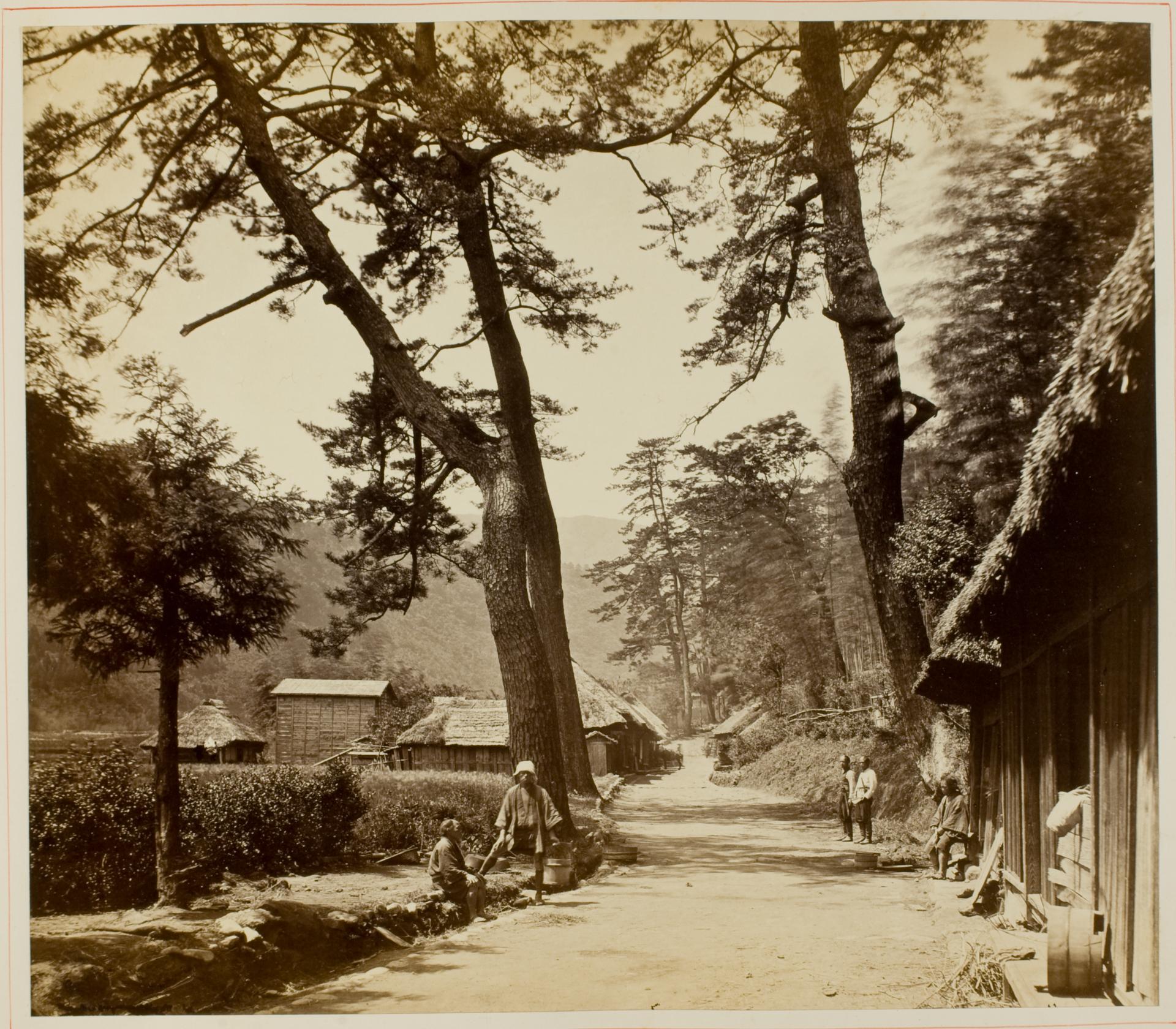
From that day to the present time, the trees have appeared to have increased. Cedars and Firs of extraordinary beauty and magnificent growth fleck parts of the way with pleasant shadows, and occasionally where bowed by age, stretch their knarled arms with protecting reach across the road they ornament, thereby relieving the monotony of their straighter and younger neighbours.
These trees may not be cut down without the leave of a magistrate, and young ones must be always be planted instead of those taken away. Hence the mature age of many of these fine specimens of timber.
VIEW ON THE TOKAIDO.
THERE are five main roads which radiate from Yedo, whose ramifications, like arteries, spread over a large extent of the island of NIPHON.
The Tokaido, which leads to OSAKA, and there terminates,
The Nakasendo, another road leading by a more circuitous route to OSAKA,
The Nikokaido, a hilly road leading to Miako,
Koof-kaido, leading to KOSHIU,
The Senjikaido which takes a Northern Easterly direction and leads to HAKODADI.
Of these main thoroughfares the Tokaido appears to be the one which merits most consideration, as being the principal highway, by which communication is facilitated between the largest cities of Japan, viz:--OSAKA, the central commercial port of Japan ; and Yedo which, up to the year 1865, was the residence of the Shiogun or Tycoon.
The Tokaido the road by which Daimios with their retinues most frequently travel, is broad, kept in very good order, and is also, for the most part level : although it crosses considerable mountain passes,--such as Hakoni,--numerous rivers and more than one arm of the sea.
In the early year of the 17th century, one of the first foreign travellers, thus remarks upon the Tokaido :--"On whatever side one turns his eye, he perceives a concourse of people passing to and fro, as in the most populous cities of Europe: The roads are lined on both besides with superb pine-trees, which keep off the sun. The distances are marked with little eminences planted with two trees."
From that day to the present time, the trees have appeared to have increased. Cedars and Firs of extraordinary beauty and magnificent growth fleck parts of the way with pleasant shadows, and occasionally where bowed by age, stretch their knarled arms with protecting reach across the road they ornament, thereby relieving the monotony of their straighter and younger neighbours.
These trees may not be cut down without the leave of a magistrate, and young ones must be always be planted instead of those taken away. Hence the mature age of many of these fine specimens of timber.