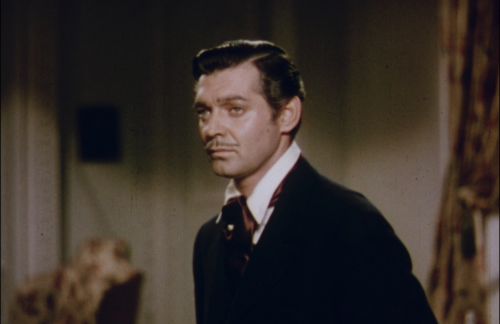
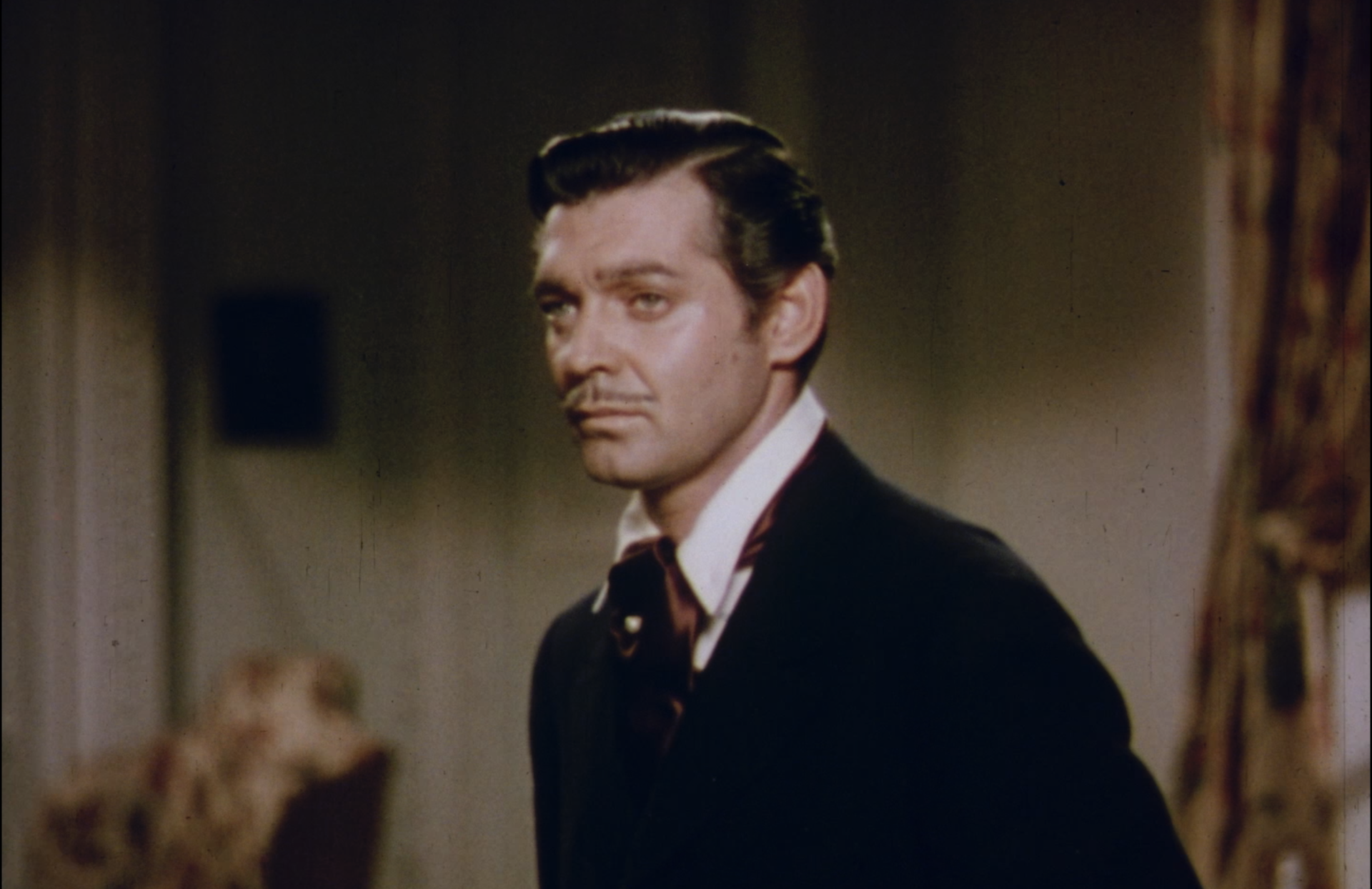
[Gone With the Wind - Makeup and Wardrobe Test - Clark Gable]
Film
[Gone With the Wind - Makeup and Wardrobe Test - Clark Gable]
1939United States
35mm nitrate master positive
GEH Collection
2001.1020.0001
TextIt was said at the time that every actress in Hollywood tested for the role of Scarlett O’Hara in Gone with the Wind. The number of screen tests devoted to David O. Selznick’s magnum opus proves that observation to be not an exaggeration. The role is challenging—Scarlett must age from 16 to 26, from a spoiled, lovestruck southern belle of the nineteenth-century plantation society sustained by slavery to a mature wife, mother, and canny businesswoman building a new life in the Reconstruction era. Finding an actress who could embody this mercurial heroine became a mission in itself, and she was revealed to Selznick only at the very last minute after the cameras had started rolling.
The screen tests presented here are some of the last ones made for the film, indicated by the early January 1939 date. Principal photography commenced in December 1938 with the burning of Atlanta, even though final casting was not complete. Most of these tests were shot in Technicolor, an expense reserved for the final cast to test hair styles, makeup, and costumes. Vivien Leigh, Clark Gable, Leslie Howard, Olivia de Havilland, Hattie McDaniel, and Evelyn Keyes all starred in the film. Four who did not make the final cast are sixteen-year-old Edythe Marrener (later known as Susan Hayward) who tested in late 1937; Margaret Tallichet, a young actress under contract to Selznick, who later married director William Wyler; Georgiana Young, half-sister to actresses Loretta Young, Sally Blane, and Polly Ann Young; and Leatrice Joy Gilbert, the daughter of two great stars of the silent era, John Gilbert and Leatrice Joy.
Gone with the Wind won nine Academy Awards including Best Picture, Best Actress (Vivien Leigh), and Best Supporting Actress (Hattie McDaniel). McDaniel was the first person of color to be honored by the Academy, but her win was still tainted by institutional racism. She was not allowed to sit at the same table as the rest of the principal cast, and MGM publicity wrote her acceptance speech.
George Eastman Museum website text
May 2020
Viewers are advised that Gone with the Wind includes racial stereotypes and disregards the atrocity of slavery.
Preserved by graduate student Donna Ellithorpe of the L. Jeffrey Selznick School of Film Preservation on the 2005 Technicolor / George Eastman Museum Fellowship
Funded by Technicolor Creative Services
The screen tests presented here are some of the last ones made for the film, indicated by the early January 1939 date. Principal photography commenced in December 1938 with the burning of Atlanta, even though final casting was not complete. Most of these tests were shot in Technicolor, an expense reserved for the final cast to test hair styles, makeup, and costumes. Vivien Leigh, Clark Gable, Leslie Howard, Olivia de Havilland, Hattie McDaniel, and Evelyn Keyes all starred in the film. Four who did not make the final cast are sixteen-year-old Edythe Marrener (later known as Susan Hayward) who tested in late 1937; Margaret Tallichet, a young actress under contract to Selznick, who later married director William Wyler; Georgiana Young, half-sister to actresses Loretta Young, Sally Blane, and Polly Ann Young; and Leatrice Joy Gilbert, the daughter of two great stars of the silent era, John Gilbert and Leatrice Joy.
Gone with the Wind won nine Academy Awards including Best Picture, Best Actress (Vivien Leigh), and Best Supporting Actress (Hattie McDaniel). McDaniel was the first person of color to be honored by the Academy, but her win was still tainted by institutional racism. She was not allowed to sit at the same table as the rest of the principal cast, and MGM publicity wrote her acceptance speech.
George Eastman Museum website text
May 2020
Viewers are advised that Gone with the Wind includes racial stereotypes and disregards the atrocity of slavery.
Preserved by graduate student Donna Ellithorpe of the L. Jeffrey Selznick School of Film Preservation on the 2005 Technicolor / George Eastman Museum Fellowship
Funded by Technicolor Creative Services