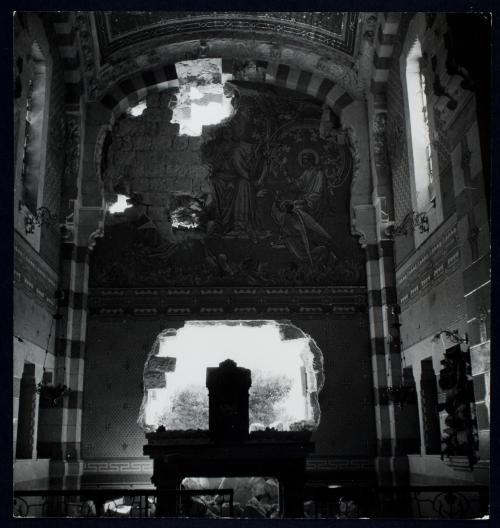
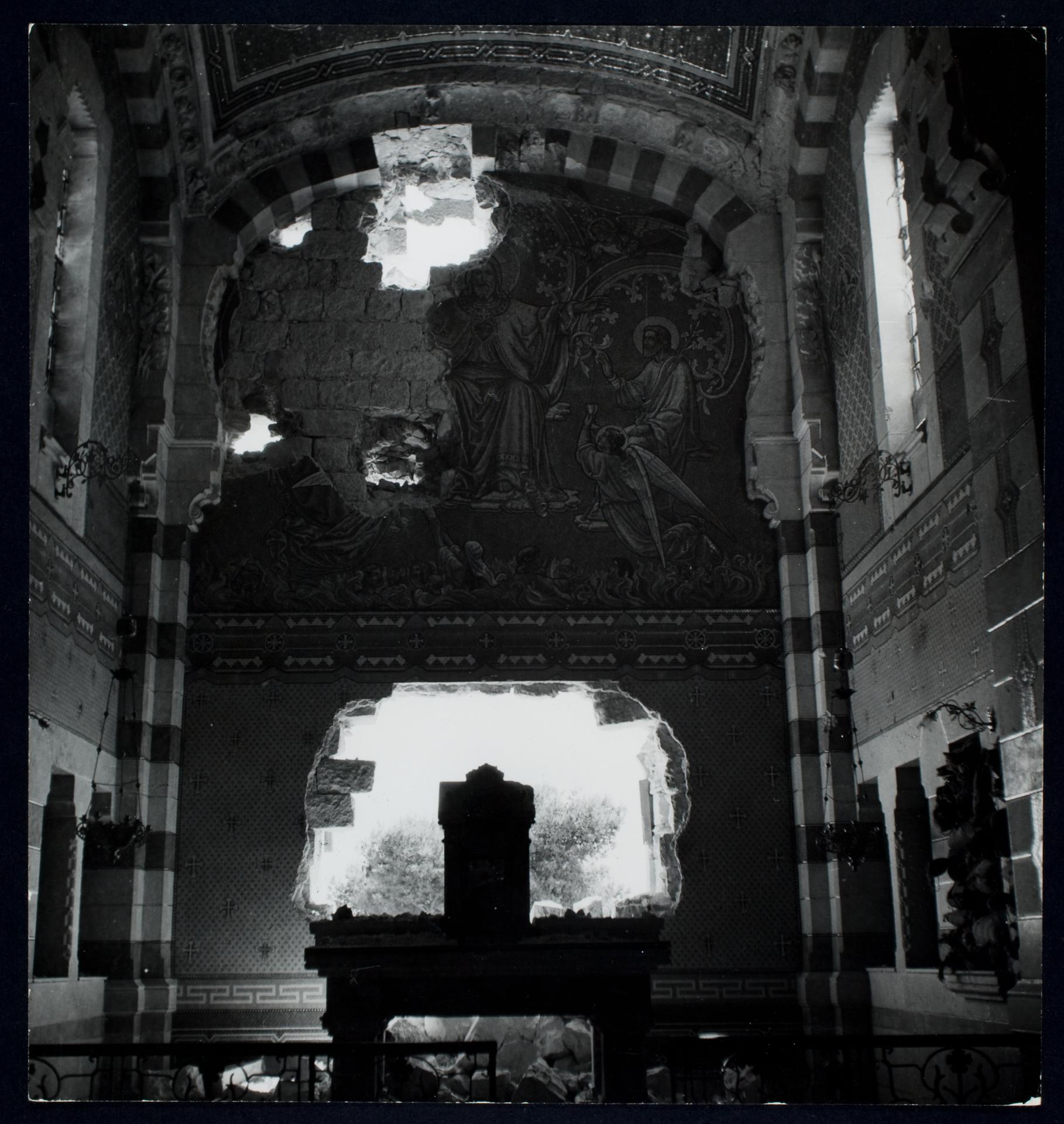
Positions around the sector of the convent of Notre Dame
Photograph
Positions around the sector of the convent of Notre Dame
From Palestine War: Scenes in Jerusalem
July 1948
Gelatin silver print
Image: 20 x 18.8 cm
Gift of George Stephanopoulos, 2005
2005.0909.0004
Inscriptions verso (typed label): [series title and description]
(stamp): Used 3 Jul 1948 Illustrated
(stamp): Property of the Periodicals Art Library / 191, High Holborn, W.C.1 / Must be returned undamaged
(ink): Strip 12
(stamp): 50549 (ink): /13
(ink): 32 %
(pencil): RC48 6-
(typed label): File Palestine War 1948 Jews Seige [sic] of Jerusalem June 1948
(stamp): Used 3 Jul 1948 Illustrated
(stamp): Property of the Periodicals Art Library / 191, High Holborn, W.C.1 / Must be returned undamaged
(ink): Strip 12
(stamp): 50549 (ink): /13
(ink): 32 %
(pencil): RC48 6-
(typed label): File Palestine War 1948 Jews Seige [sic] of Jerusalem June 1948
TextThe convent is directly outside the wall of the old city and the fighting is from building to building. The Arabs who se [sic] superior arms are shelling constantly and the Jews are solidly established in the surrounding buildings. From behind sandbags they observe the movements of the enemy with hand made periscopes and the shell and bullet holes on the walls show the intensity of the fire. All attacks are at night and in the day time it is only shelling and sniping. Through the big broken windows is a full view of the old city. The convent and the chapel itself are badly damaged by the 25 pound shells from the Arab Legion. French doctor and nurse taking [sic] care of wounded Arabs in the hospital of the convent. Before the hostilities, it was the main hospital taking care of the sick of the old city. The soldiers in this sector have to be under constant cover and they relax by reading newspapers under the protection of the staircases etc. In the meantime, more and more sandbags are filled for protection. During the cease fire, the lines here will not change, only the shelling will cease fro no one knows how long.
Robert Capa records the last hours in Jerusalem before the Cease Fire, when the city was subjected to the cruelest bombardment of the siege. The city is still linked to Israel by a mountain road that is under constant fire.
Robert Capa records the last hours in Jerusalem before the Cease Fire, when the city was subjected to the cruelest bombardment of the siege. The city is still linked to Israel by a mountain road that is under constant fire.