[War War II, Army weapons training, activities in France, Luxemburg and Germany through 1945]
Photograph
[War War II, Army weapons training, activities in France, Luxemburg and Germany through 1945]
September 1943- March 1945
Gelatin silver print
Image: 3 5/8 × 4 5/16 in. (9.2 × 11 cm)
Overall: 3 15/16 × 4 5/8 in. (10 × 11.7 cm)
Gift of Peter, Nancy and Stephen Freeman in memory of their father, Mark A. Freeman, 2007
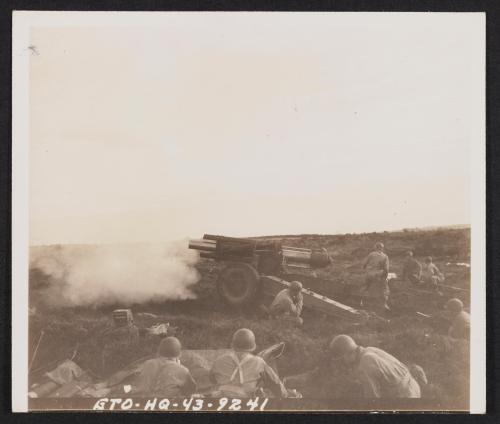
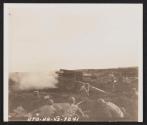
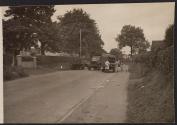
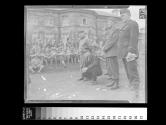
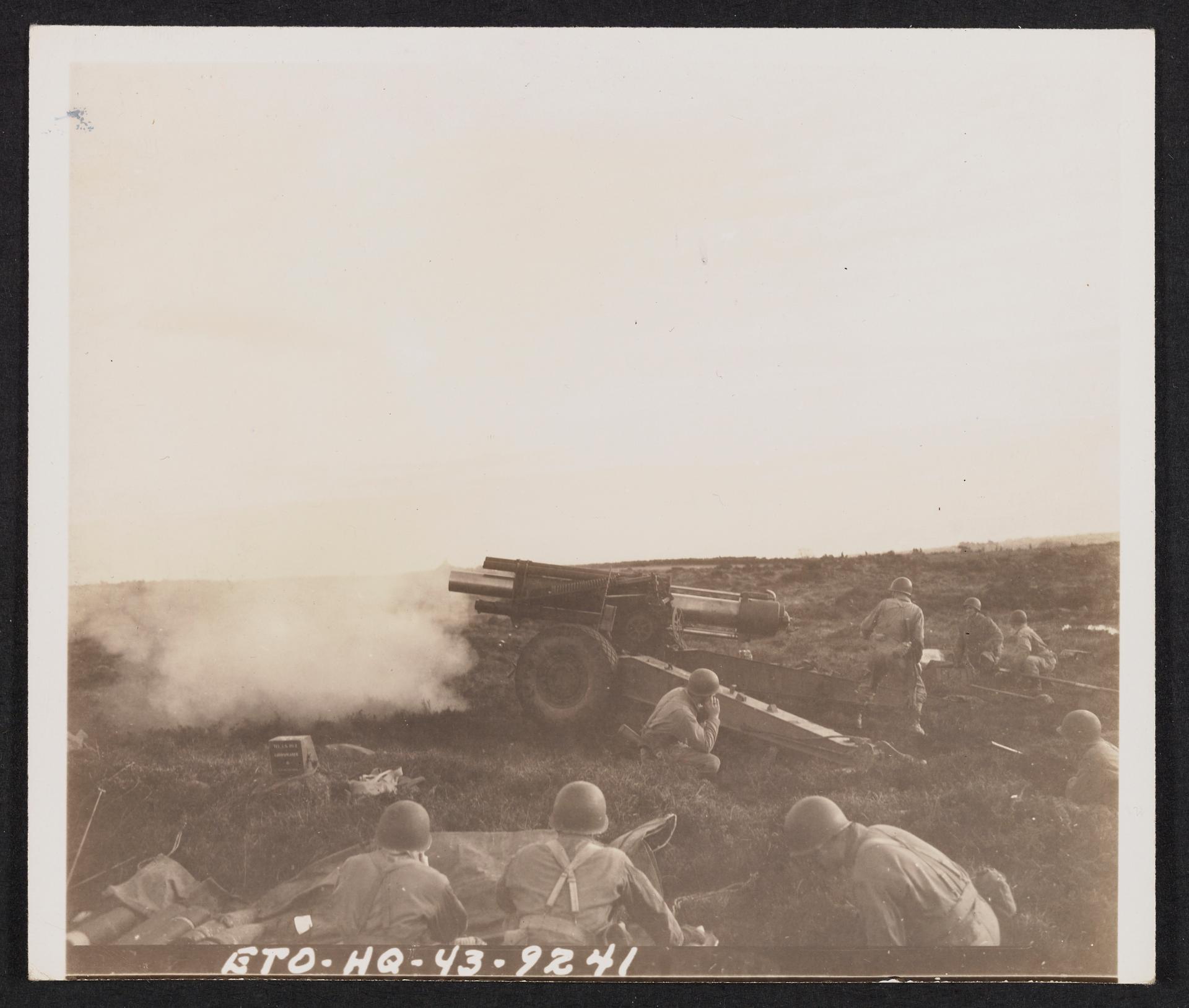
Description236 gelatin silver photographs, approximately 4 x 5 in. that date from September of 1943 to March of 1945. These include images of Army training in the United Kingdom in 1943 (including weapons training and landmine placement and detonation) through to the invasion of Germany and capture of prisoners activity in Luxemburg and the immediate aftermath of the war, in France in 1945. The prints in this lot that have been reviewed and passed by the U.S. Army Press Censor, as indicated by a rubber stamp, and many of them bear red ink marks over names and military numbers on uniforms, cover labels on bookshelves and file cabinets, block the faces of dead American soldiers and cross over images of maps on the wall. On the verso, blue pencil marks are used to edit and delete information from the mimeographed captions.
From England the Fifth Infantry Division moved to Northern Ireland for pre-invasion training. A field range school in Annalong provided the space required to fire artillery such as 105mm howitzers without fear of endangering local residents, whereas St. John's Point provided better terrain for anti-aircraft training.
The Fifth Infantry Division arrived on French soil on July 9, 1944, thirty-three days after D-day. His first photograph of France is dated July 26, 1944 the same day that the Fifth Infantry Division began its battle for the town of Vidouville, France.
His photographs of the war trace his path across France. Arriving in Normandy, Freeman moved to Cerisy-la-Forêt, then on to Saint-Ouen-des-Besaces. On the 3rd of August, 1944 the Fifth Infantry Division received orders that it was to join up with the newly formed Third US Army under General George Patton, Jr. who had taken command three days prior. The Fifth's first task was to take back the town of Angers, France and the bridges across the Maine and Loire Rivers.
The Third Army continued on its famous dash across France, and the Fifth Infantry Division continued to sweep eastward liberating towns and cities as it went. A major battle took place around the French city of Metz in November 1944. Metz was heavily fortified with twenty-two individual forts surrounding it on all sides. To plan for such an offensive, aerial reconnaissance photographs were vital in preparing a battle plan. Freeman went up in a plane on several occasions to photograph Forts Driant, Sommy, and St. Blaise. On one particular occasion Freeman, knowing that aerial photographs were urgently needed, commandeered a small, unarmed spotter plane and ordered the pilot to fly low over the fortifications surrounding Metz, France. In order to get the photographs he wanted, he actually balanced on the plane's struts.
After Metz, the Fifth Infantry Division continued through France and into Luxembourg in December 1944.
From England the Fifth Infantry Division moved to Northern Ireland for pre-invasion training. A field range school in Annalong provided the space required to fire artillery such as 105mm howitzers without fear of endangering local residents, whereas St. John's Point provided better terrain for anti-aircraft training.
The Fifth Infantry Division arrived on French soil on July 9, 1944, thirty-three days after D-day. His first photograph of France is dated July 26, 1944 the same day that the Fifth Infantry Division began its battle for the town of Vidouville, France.
His photographs of the war trace his path across France. Arriving in Normandy, Freeman moved to Cerisy-la-Forêt, then on to Saint-Ouen-des-Besaces. On the 3rd of August, 1944 the Fifth Infantry Division received orders that it was to join up with the newly formed Third US Army under General George Patton, Jr. who had taken command three days prior. The Fifth's first task was to take back the town of Angers, France and the bridges across the Maine and Loire Rivers.
The Third Army continued on its famous dash across France, and the Fifth Infantry Division continued to sweep eastward liberating towns and cities as it went. A major battle took place around the French city of Metz in November 1944. Metz was heavily fortified with twenty-two individual forts surrounding it on all sides. To plan for such an offensive, aerial reconnaissance photographs were vital in preparing a battle plan. Freeman went up in a plane on several occasions to photograph Forts Driant, Sommy, and St. Blaise. On one particular occasion Freeman, knowing that aerial photographs were urgently needed, commandeered a small, unarmed spotter plane and ordered the pilot to fly low over the fortifications surrounding Metz, France. In order to get the photographs he wanted, he actually balanced on the plane's struts.
After Metz, the Fifth Infantry Division continued through France and into Luxembourg in December 1944.
Inscriptions verso (mimeographed in blue ink):