The Angel at the Tomb
Photograph
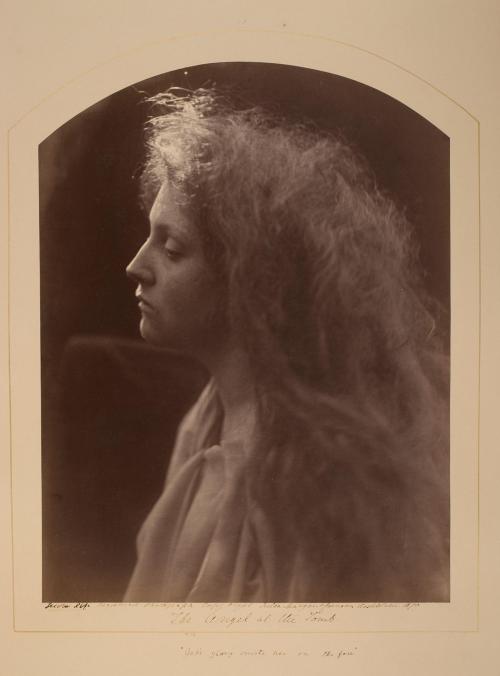
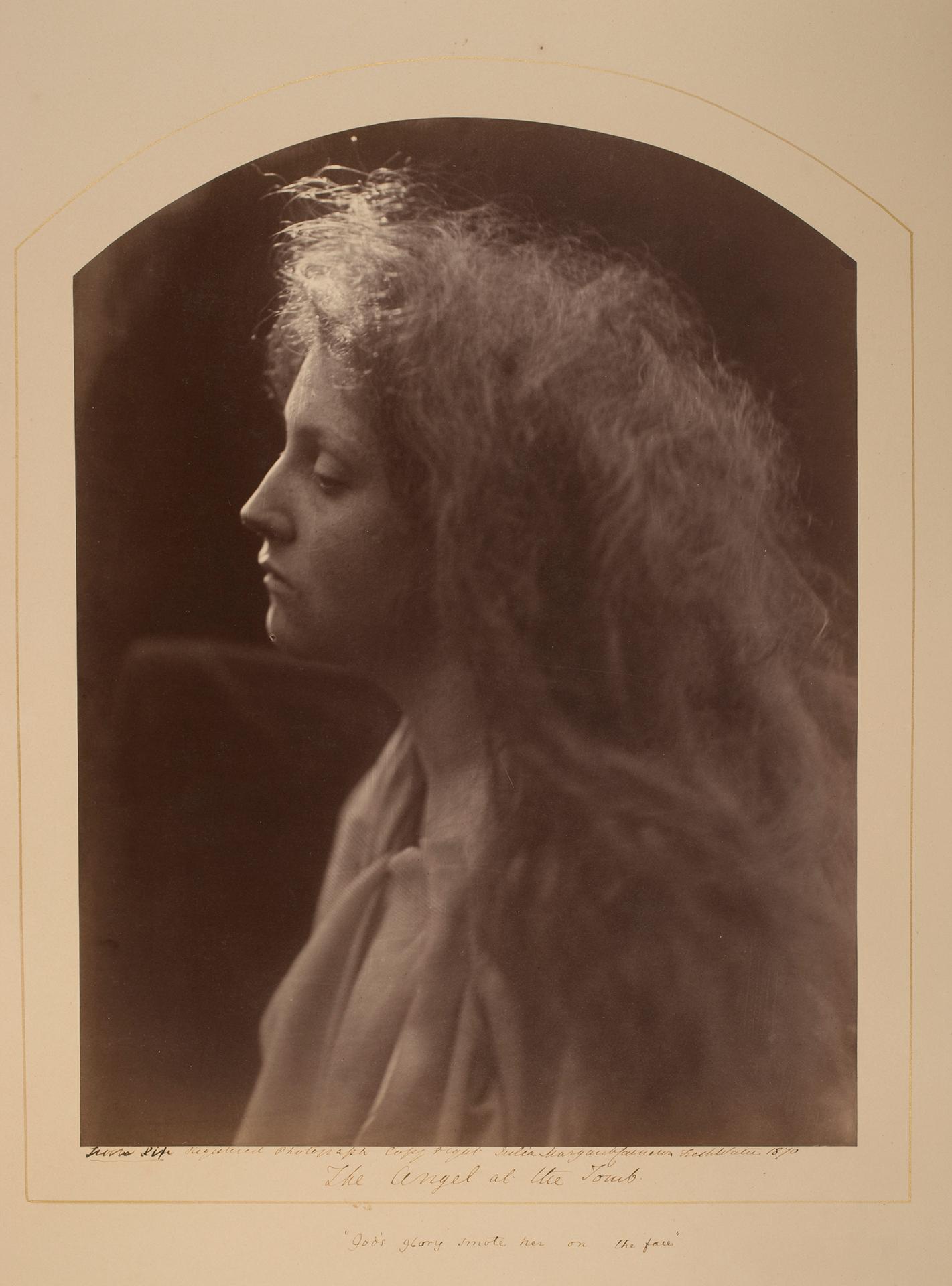
The Angel at the Tomb
1870
Albumen silver print
Image (arched top): 13 5/8 × 10 3/8 in. (34.6 × 26.4 cm)
Mount: 22 7/8 × 18 5/16 in. (58.1 × 46.5 cm)
Matted: 22 × 28 in. (55.9 × 71.1 cm)
Purchase
1981.1124.0009
Inscriptions Inscribed in black ink on mount recto, BC: From life Registered Photograph Copy right Julia Margaret Cameron Fresh Water 1870 \ The Angel at the Tomb \ "God's flory smote her on the face"
Inscribed in black ink on mount recto, BRC: For Mr. Warde sent by his friend's mother \ with her love \ (a corruscation of spiritual unearthly light is \ playing over the head in mystic lightning flash of glory)
Inscribed in pencil on mount recto, BRC: 8
Inscribed in pencil on mount verso: Cameron
Inscribed in black ink on mount recto, BRC: For Mr. Warde sent by his friend's mother \ with her love \ (a corruscation of spiritual unearthly light is \ playing over the head in mystic lightning flash of glory)
Inscribed in pencil on mount recto, BRC: 8
Inscribed in pencil on mount verso: Cameron
TextIn 1863, at the age of 48, Julia Margaret Cameron received her first camera. It was a gift from her daughter. In the eleven years that followed, Cameron became internationally renowned for her unconventional approach, in a field dominated by male practitioners. Cameron drew her subject matter from poetry, literature, and religion. She found her models in her circle of friends and household staff. Here, Cameron depicts a scene from Christ’s resurrection, but she deviates from the traditional story by choosing a female model to portray the angel Gabriel. The woman in this photograph is Mary Ann Hillier, a housemaid who was one of Cameron’s most photographed models.
—Label text, History of Photography [Rotation 15]
—Label text, History of Photography [Rotation 15]