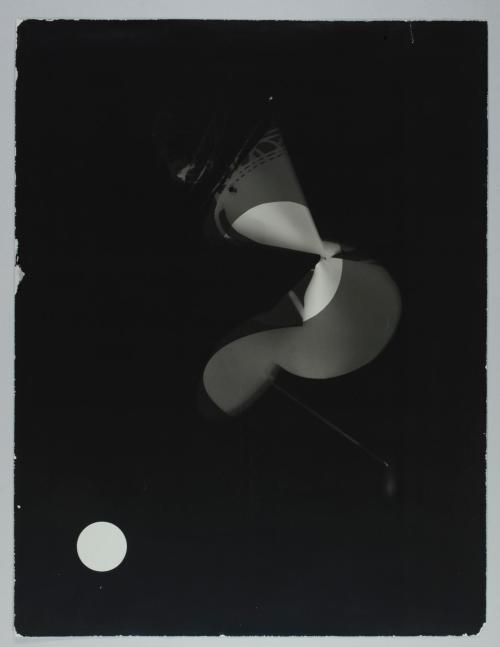
[Photogram]

Photograph
[Photogram]
ca. 1923
Gelatin silver print
Image/Overall: 38.6 x 29.6 cm
Purchase with funds from Eastman Kodak Company
1981.2163.0025
Inscriptions verso-(in pencil) "oben" "neben einander"
(in ink) "GEH-5"
(in ink) "GEH-5"
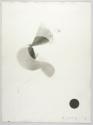
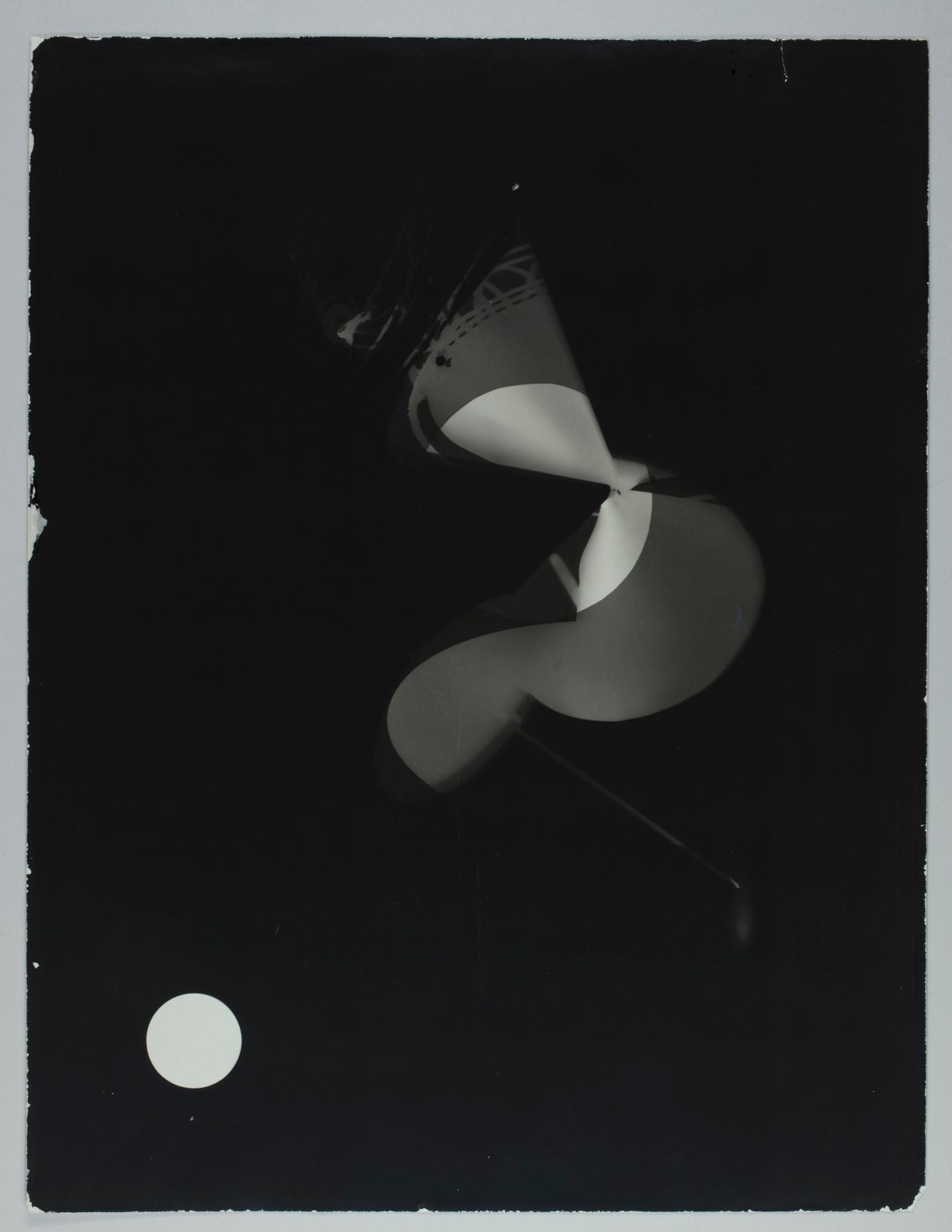
TextTo make this photograph, László Moholy-Nagy placed objects directly onto photographic paper in the darkroom, exposed the configuration to light and then developed the print. The resulting photogram—the term for photographic prints made in this fashion without the use of a camera—is an especially compelling example from Moholy’s early engagement with this process. Although he continued to make photograms for the rest of his career, his most intensive experiments occurred from about 1923 to around 1928, while he was on faculty at the Bauhaus. His teachings and writings from these years are heavily influenced by constructivism, which promoted abstract geometric art as a universal language with the potential to improve society by recalibrating one’s understanding of time and space. Moholy believed that the most direct and effective medium for accomplishing this goal was light. By manipulating light and form in the darkroom so that the resulting images bore little resemblance to anything familiar, he hoped to open minds to new and unprecedented ways of thinking.
Lisa Hostetler, Ph.D.
Curator in Charge, Department of Photography
Label for A History of Photography [Rotation 1]
May 9–September 28, 2014
Lisa Hostetler, Ph.D.
Curator in Charge, Department of Photography
Label for A History of Photography [Rotation 1]
May 9–September 28, 2014
TitleObject