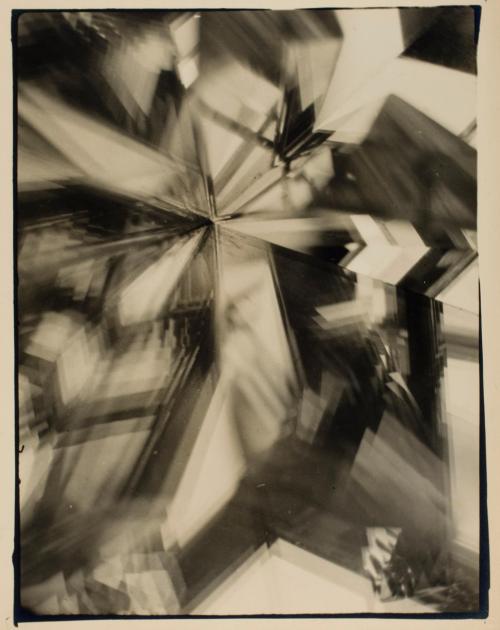
Vortograph
Photograph
Vortograph
1917
Gelatin silver print
Image: 11 1/8 × 8 9/16 in. (28.2 × 21.8 cm)
Paper: 12 3/16 × 10 1/16 in. (30.9 × 25.5 cm)
Bequest of Alvin Langdon Coburn
1967.0098.0024
Inscriptions [no inscription]
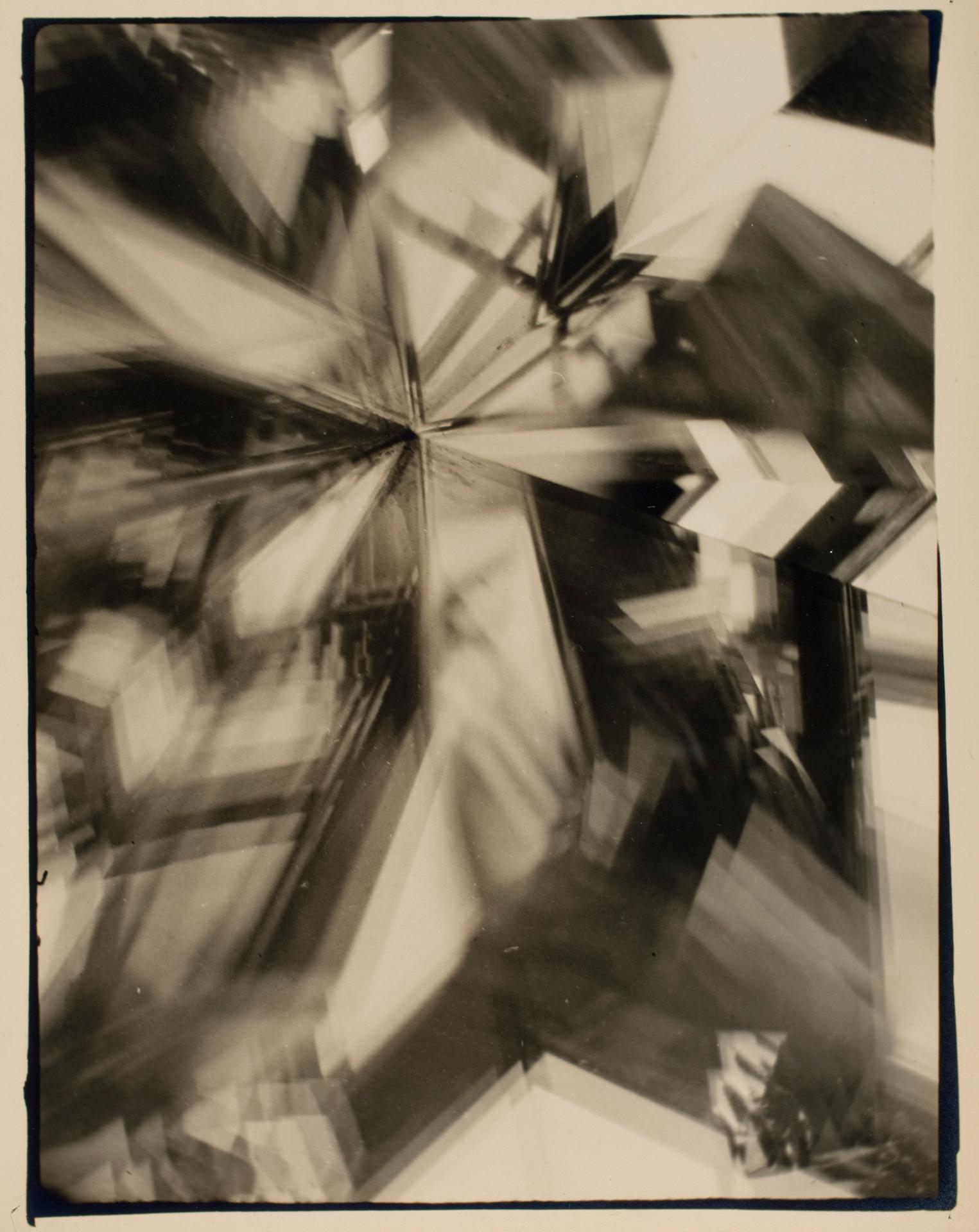
TextThough Alvin Langdon Coburn’s “Vortographs” are extremely rare and were made within a very condensed period of time—Coburn made only eighteen within roughly one month—they remain some of the artist’s most significant works. Coburn’s Vortographs took their name and inspiration from Vorticism, a short-lived British art and poetry movement that focused on machine-age aesthetics led by the poet Ezra Pound, a friend of Coburn’s. These strikingly modern photographs are among the earliest examples of non-representational photography and were a significant departure from the Pictorialist-inspired cityscapes and portraits for which Coburn was well known within art photography circles. Coburn made his Vortographs with a “Vortoscope,” a specially designed camera that featured three mirrors clamped together in a triangle that acted much like a kaleidoscope by fracturing and distorting an image to the point of abstraction.
Lisa Hostetler, Ph.D.
Curator in Charge, Department of Photography
Label for A History of Photography [Rotation 1]
May 9–September 28, 2014
Lisa Hostetler, Ph.D.
Curator in Charge, Department of Photography
Label for A History of Photography [Rotation 1]
May 9–September 28, 2014