Burial Ground of the Taikuns
Photograph
Burial Ground of the Taikuns
From the album Photographic Views and Costumes of Japan
ca. 1868
Albumen silver print
22.1 x 28.4 cm.
Purchase
1979.0059.0021
Inscriptions (applied label, printed, opposite page):
BURIAL GROUND OF THE TAIKUNS.
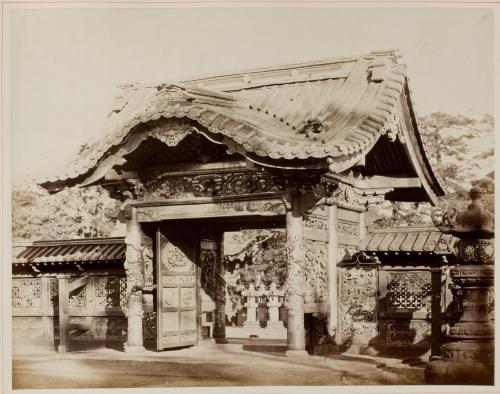
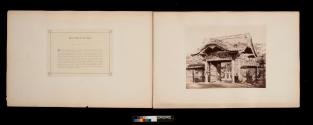
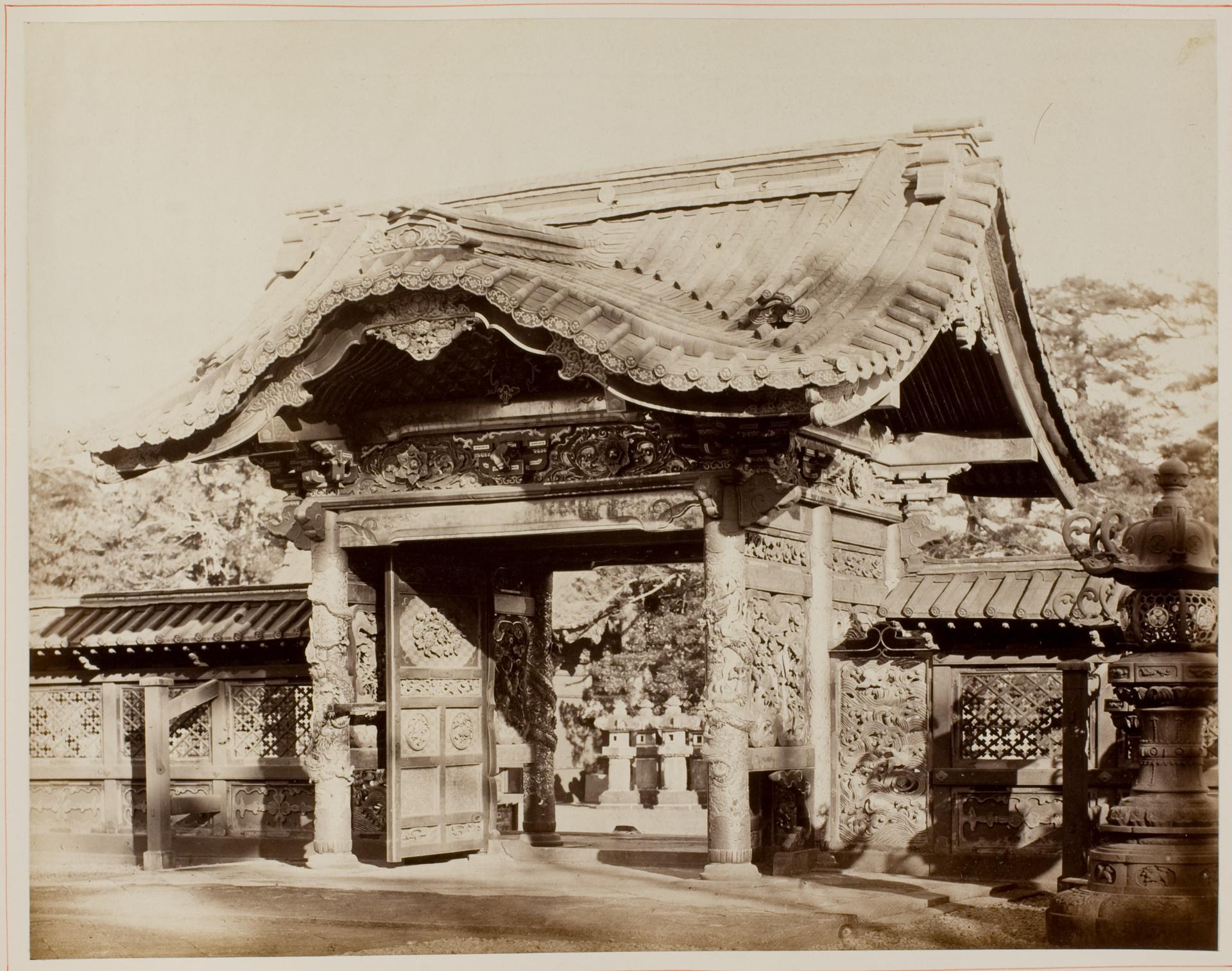
WITH the exception of Iyeyasu himself, the Taikuns of the dynasty founded by Iyeyas, are all buried either at Shiba or at Ueno, in Yedo. The view represents the gateway and front of a small, but highly finished temple or shrine immediately behind the main temple in the centre of the burial ground at Shiba. This small temple is erected to Kuro-hou-zou, or the "Black true Buddha," who, according to the legend, came to the aid of Iyeyasu on one occasion when he was on the point of being overwhelmed by his enemies. Our guide, when showing us through these grounds, informed us in his imperfect English, that it was a temple to the "good God." The doors, both inside and outside are exquisitely coloured and gilded, and covered with carvings of peacocks and other birds all in the natural hues of their plumage. The gateway, as well as the whole front and sides of the temple, are similarly ornamented.
BURIAL GROUND OF THE TAIKUNS.
WITH the exception of Iyeyasu himself, the Taikuns of the dynasty founded by Iyeyas, are all buried either at Shiba or at Ueno, in Yedo. The view represents the gateway and front of a small, but highly finished temple or shrine immediately behind the main temple in the centre of the burial ground at Shiba. This small temple is erected to Kuro-hou-zou, or the "Black true Buddha," who, according to the legend, came to the aid of Iyeyasu on one occasion when he was on the point of being overwhelmed by his enemies. Our guide, when showing us through these grounds, informed us in his imperfect English, that it was a temple to the "good God." The doors, both inside and outside are exquisitely coloured and gilded, and covered with carvings of peacocks and other birds all in the natural hues of their plumage. The gateway, as well as the whole front and sides of the temple, are similarly ornamented.