View at Eiyama
Photograph
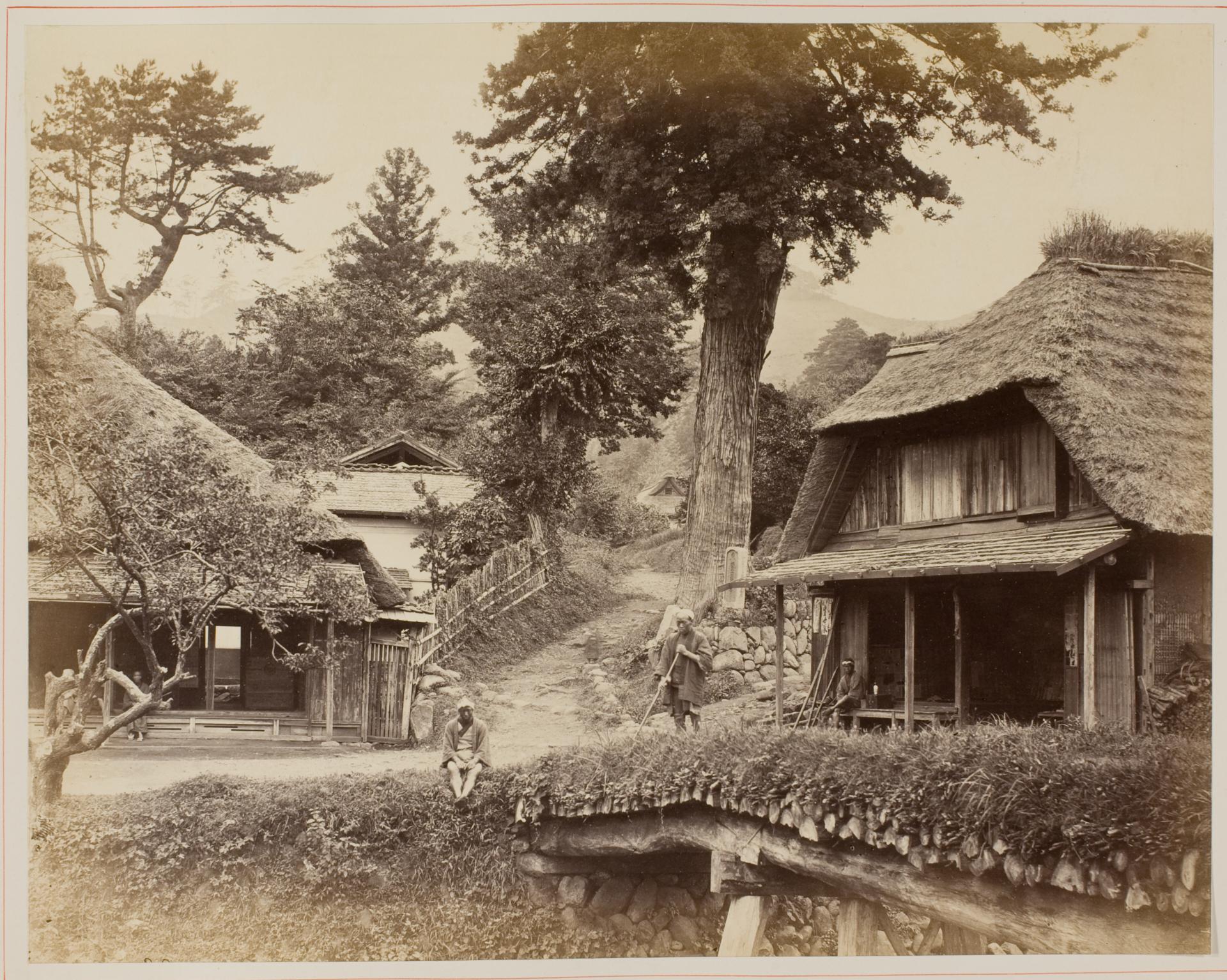
View at Eiyama
From the album Photographic Views and Costumes of Japan
ca. 1868
Albumen silver print
22.8 x 29.0 cm.
Purchase
1979.0059.0029
Inscriptions (applied label, printed, opposite page):
VIEW AT EIYAMA.
MOST strangers are struck by the neatness and order which prevail in the humblest cottage in Japan-and also by the extreme simplicity of the furniture-a few mats, which being about four inches thick, and made of rushes or straw, are soft and pleasant to walk on form the usual flooring,--and except that the workmanship in those used in the Daimio's palace is superior to the cottar's, there is little difference in the appearance or material used by all classes. Every mat is of the same size-about 6 feet long by 3 broad-land is measured by mats.
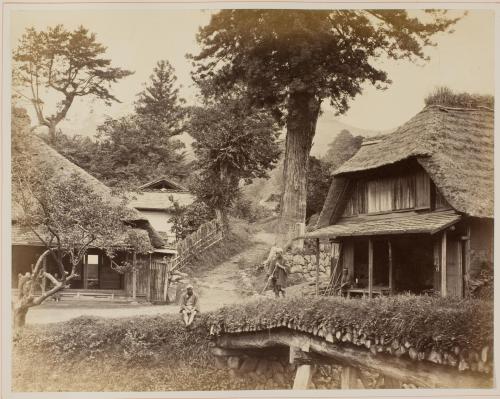
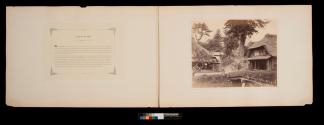
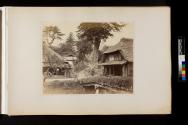
The temple of the god, the palace of the prince, and the cottage of pine peasant are alike also, with few exceptions, roofed with thatch ; tiles are occasionally made use of, and also thin shavings of pine or cedar, not unlike shingles in America-but by far the greater proportion of all buildings are thatched, and the weight and thickness of some of the temple roofs, as well as the neatness of finish are particularly striking. Owing to the volcanic nature of the country, few houses are erected of more than one story high; in the silk districts, where Eiyama is situated, a garret is often seen, which is used for the care and development of the silk-worms, and for other processes in the manufacture of silk. The green lane shown, is one that Bicket Foster would delight in studying-the rustic bridge with its simplicity of form and material, and general picturesqueness forms a charming bit of foreground.
VIEW AT EIYAMA.
MOST strangers are struck by the neatness and order which prevail in the humblest cottage in Japan-and also by the extreme simplicity of the furniture-a few mats, which being about four inches thick, and made of rushes or straw, are soft and pleasant to walk on form the usual flooring,--and except that the workmanship in those used in the Daimio's palace is superior to the cottar's, there is little difference in the appearance or material used by all classes. Every mat is of the same size-about 6 feet long by 3 broad-land is measured by mats.
The temple of the god, the palace of the prince, and the cottage of pine peasant are alike also, with few exceptions, roofed with thatch ; tiles are occasionally made use of, and also thin shavings of pine or cedar, not unlike shingles in America-but by far the greater proportion of all buildings are thatched, and the weight and thickness of some of the temple roofs, as well as the neatness of finish are particularly striking. Owing to the volcanic nature of the country, few houses are erected of more than one story high; in the silk districts, where Eiyama is situated, a garret is often seen, which is used for the care and development of the silk-worms, and for other processes in the manufacture of silk. The green lane shown, is one that Bicket Foster would delight in studying-the rustic bridge with its simplicity of form and material, and general picturesqueness forms a charming bit of foreground.